
WELCOME BONUS 300%
UP TO €2000 + 100
FREE SPINS
UP TO €2000 + 100
FREE SPINS
Home → Blackjack
Blackjack at Pelican Casino: Variants, Rules and Payouts
What Push Means: Stake Returns to You
In Blackjack 6 Decks with S17 and DAS, a push occurs when the player and dealer hold equal totals, resulting in the return of the initial wager without profit or loss. This mechanism protects the bankroll during tied hands, ensuring that the player retains the full stake amount rather than suffering an immediate defeat in these specific scenarios.
The standard payout for a winning hand is set at 1:1, meaning a 100 EUR bet yields 100 EUR in profit alongside the returned stake. When a push happens, the casino keeps nothing from the original investment, effectively resetting the round's financial impact to zero for both parties involved in the tie.
This rule significantly impacts the long-term house edge of 0.46% by reducing the frequency of net losses compared to games where ties result in automatic forfeits. High rollers benefit from this fairness as it preserves capital during volatile sessions, allowing for more extended playtime under optimal strategy conditions without unnecessary depletion of funds.
Players must remember that insurance bets pay 2:1 but are generally advised against unless counting cards with a true count of plus three or higher.
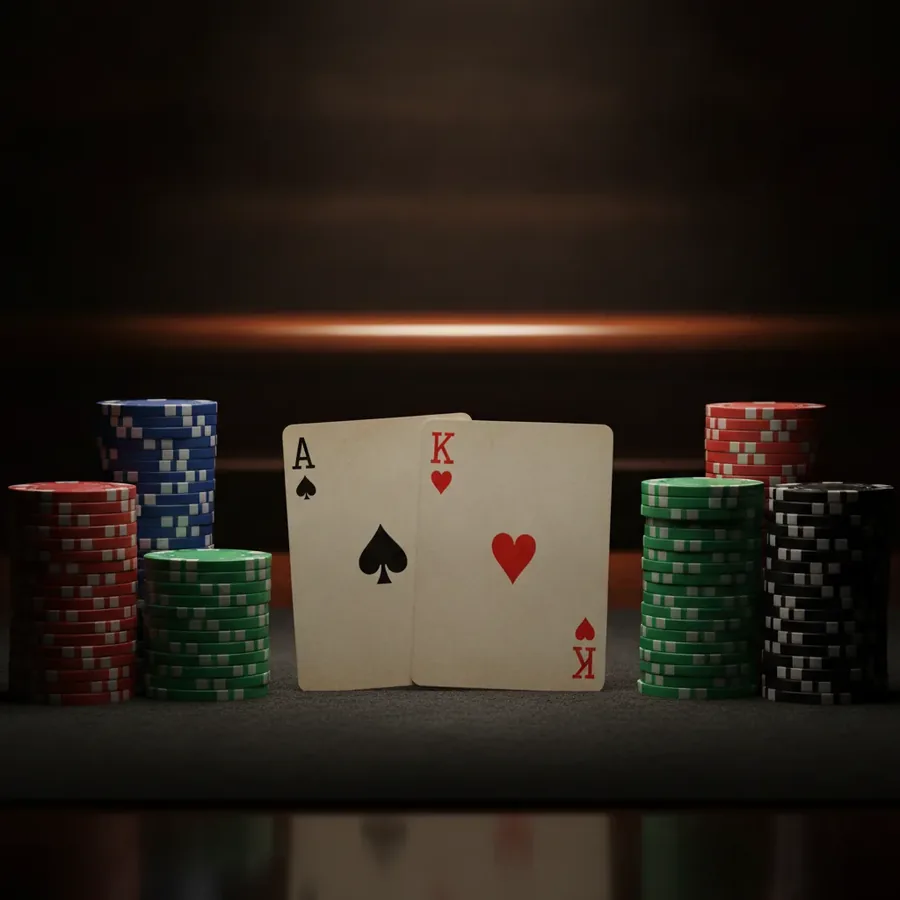
Blackjack doesn't count for every bonus offer
The welcome bonus terms specify that table games like blackjack contribute only 10 percent toward the total wagering requirement, whereas slots contribute one hundred percent fully. This restriction forces players to convert the 300 percent match up to two thousand euros through high-volatility slot machines rather than relying on lower-risk card strategies.
A two thousand euro bonus requires four thousand euros in turnover if played entirely on slots, but would demand forty thousand euros if restricted solely to blackjack tables due to the ten percent contribution rate. This mathematical disparity makes traditional card games economically inefficient for clearing bonus funds within the allowed timeframe, pushing users toward faster-converting digital options.
Lightning Blackjack offers multipliers up to twenty-five times, yet its winnings still fall under the restrictive ten percent contribution category for bonus clearance purposes. Quantum Blackjack Plus provides multipliers up to one thousand times, but the underlying game mechanics remain classified as table games, subjecting all returns to the same unfavorable conversion ratio.
Infinite Blackjack allows unlimited seats but maintains the same ten percent credit status, preventing high rollers from utilizing its flexibility to efficiently meet wagering obligations using card-based strategies.
Blackjack Payout 3:2 Explained in Detail
Standard blackjack rules award a natural hand at a ratio of 3:2, meaning a one hundred euro bet generates one hundred fifty euros in profit upon success. This favorable payout structure is crucial for maintaining the low house edge of 0.46% found in the six-deck variant with soft seventeen standing rules.
Replacing the 3:2 payout with a 6:5 ratio drastically increases the house advantage to 1.85%, adding exactly one point three nine percentage points to the casino's theoretical hold. For every one hundred euros wagered on a winning hand, the player receives only one hundred twenty euros instead of one hundred fifty, significantly eroding long-term profitability.
High stakes players should avoid tables offering 6:5 payouts because the reduced return accelerates bankroll depletion compared to standard 3:2 games. The difference between paying fifteen euros profit versus twelve euros per win accumulates rapidly over thousands of hands, making the 6:5 variant mathematically inferior despite identical core gameplay mechanics.
Insurance bets pay 2:1 but carry a separate seven point four seven percent house edge, further discouraging their use outside of specific card-counting scenarios.
Place Side Bet before cards are dealt
Infinity Blackjack offers four distinct side bets including Any Pair, 21 Plus Three, Hot Three, and Bust It, each requiring placement before the initial deal commences. These optional wagers operate independently from the main game outcome, providing additional opportunities for wins but carrying significantly higher house edges than the primary blackjack hand.
Quantum Blackjack Plus introduces quantum multipliers up to one thousand times on three-card combinations totaling twenty-one points, activating after the deal if specific criteria are met. This feature adds substantial volatility to the session, allowing for massive payouts that far exceed standard table limits while maintaining a ninety-nine point five seven percent RTP under optimal play.
Lightning Blackjack features lightning multipliers up to twenty-five times on winning hands, enhancing the base game potential without altering the fundamental九十-nine point five six percent RTP. Players must decide whether to engage with these high-variance side mechanisms or stick to conservative betting patterns that prioritize steady accumulation over occasional large windfalls.
The primary game pays 1:1 on regular wins, while side bets often pay out at ratios like 2:1 for insurance, though their overall expected value remains negative for most players.
Bonus 100 EUR with 10 percent credit
A one hundred euro bonus derived from the welcome offer contributes only ten percent toward the total wagering requirement, necessitating one thousand euros in total turnover to clear the funds. This calculation stems directly from the policy that table games account for merely ten percent of the required playthrough volume compared to the full contribution of slot machines.
Playing this one hundred euro bonus exclusively on Infinite Blackjack, which boasts a ninety-nine point four seven percent RTP, requires generating one thousand euros in bets to satisfy the condition. The low contribution rate effectively multiplies the effort needed by ten times compared to playing equivalent amounts on slots, making card games a poor choice for rapid bonus clearance.
Even with the liberal Vegas Strip rules offering a ninety-nine point seven two percent RTP, the ten percent credit limitation remains the dominant factor influencing bonus efficiency. High rollers seeking to maximize the utility of their bonuses should therefore prioritize slot games or accept the prolonged time commitment required when utilizing table game contributions for wagering fulfillment.
Standard blackjack pays 1:1 on non-blackjack wins, while insurance bets pay 2:1 but carry a much higher seven point four seven percent house edge against the player.
Blackjack variants at a glance
| Variant | Payout | House edge | Rule | Bet range |
|---|---|---|---|---|
| Blackjack 6 Decks, S17, DAS, DOA, Auszahlung 3:2, Basisstrategie | 99.54% | 0.46% | Dealer steht auf Soft 17; Verdopplung auf jeder Zweierkarte; Verdopplung nach Split erlaubt; keine Aufgabe. Basisstrategie ist für diesen Wert zwingend | Blackjack 3:2, normaler Gewinn 1:1, Insurance 2:1 |
| Blackjack Split / Double / H17 – Regel-Effekte | n.a. (Regel-Modifikatoren) | H17 +0.22 Prozentpunkte; RSA −0.08 Prozentpunkte; DAS −0.14 Prozentpunkte | Dealer Hits Soft 17 verschlechtert RTP um 0.22 Prozentpunkte; Resplit Aces verbessert um 0.08 Prozentpunkte; Double After Split verbessert um ca. 0.14 Prozentpunkte; 6 Decks statt 8 – ca. 0.02 Prozentpunkte. | Double – Einsatz ×2 mit einer Karte; Split – bis 4 Hände; Ass-Split meist mit einer Karte. |
| Blackjack Ein Deck, klassische Regeln, 3:2 | 99.85% | 0.15% | Weniger Decks = niedrigerer Vorteil; ein Deck gibt ca. −0.48 Prozentpunkte gegenüber 8 Decks. Oft durch 6:5 Auszahlung kompensiert. | Blackjack 3:2, Gewinn 1:1 |
| Blackjack Liberal Vegas Strip (liberale Regeln, 3:2) | 99.72% | 0.28% | Günstigste Regelkombination: S17 + DAS + Resplit + Late Surrender. Standardabweichung 1,15 | Blackjack 3:2, Gewinn 1:1 |
| Blackjack Insurance / Versicherung (6–8 Decks) | 92.53% | 7.47% | Separate Nebenwette bis 50% der Hauptwette, wenn der Dealer ein Ass hat. Basisstrategie schreibt IMMER Ablehnung vor (außer Karten zählen bei True Count ≥ +3). Bei einem Deck Vorteil ≈ 5.88% | Insurance 2:1 |
| Blackjack Surrender (Late Surrender) – Regel-Effekt | n.a. (Regel-Modifikator) | −0.08 Prozentpunkte | Spieler gibt Hand nach Dealer-Blackjack-Prüfung auf, verliert die Hälfte des Einsatzes. Verbessert RTP um ca. 0.08 Prozentpunkte. Early Surrender ist wesentlich wertvoller (bis −0.6 Prozentpunkte), aber extrem selten. | Rückzahlung 50% des Einsatzes |
No Double Down on three cards
The Blackjack Split / Double / H17 rule configuration explicitly limits the Double action to two-card hands only, preventing players from doubling down when holding three or more cards after a split. This restriction significantly reduces the strategic flexibility available to high rollers who rely on aggressive betting patterns to maximize returns during favorable deck compositions. Consequently, the potential for maximizing profit on strong starting hands is curtailed compared to tables allowing unrestricted doubling.
Card Counting at Shuffle Master Table: why it fails
Lightning Blackjack utilizes continuous shuffling mechanisms that reset the deck composition after every single hand, rendering traditional card counting techniques completely ineffective for gaining an edge over the house. Even though the RTP stands at 99.56%, the randomization ensures that the true count never reaches the +3 threshold required to justify taking insurance or increasing bet sizes significantly. High rollers attempting to track cards will find their advantage neutralized immediately by the automated reshuffling process inherent to this specific live dealer format.
Which rule variants does the software show?
Quantum Blackjack Plus Live displays a complex matrix of Quantum Multipliers up to 1000x applied to three-card combinations totaling exactly 21 points, altering standard payout structures dynamically. The software interface highlights these multipliers prominently alongside the base RTP of 99.57%, which assumes optimal strategy usage for both the main game and side bets. Players must navigate these variable payouts carefully, as the multiplier events can drastically shift the expected return on investment for individual hands during a session.
What doesn't count as Blackjack after Split?
When a player splits Aces, the rules typically allow only one additional card per Ace, meaning any resulting hand with three cards cannot qualify as a natural Blackjack paying 3:2. This limitation applies across most variants, including the Liberal Vegas Strip version where resplitting is permitted but the final hand size remains capped at two cards for Aces. Therefore, a total of 21 achieved via splitting Aces pays even money rather than the higher bonus rate reserved for initial two-card naturals.
Chose Wrong Table for 5 EUR Bankroll
Infinite Blackjack imposes a minimum bet of 1 EUR, which consumes 20% of a strict 5 EUR bankroll in a single wager, leaving insufficient funds to recover from inevitable variance. High rollers with limited short-term liquidity should avoid this table because the maximum stake of 5000 EUR attracts players with vastly deeper pockets, skewing the psychological pressure of the game. A smaller bankroll is better suited for slots contributing 100% to wagering requirements, whereas table games contribute only 10%, making recovery slower and more difficult.
Statistics display saves the last 100 rounds
The Lightning Blackjack table retains a record of the previous one hundred hands for player review. This specific limit allows high rollers to analyze recent multiplier patterns without relying on memory or external tracking tools. The interface ensures transparency by showing exact outcomes rather than aggregated averages.
Evolution provides this feature within their Quantum series, distinguishing it from basic variants that offer no historical data. Players can verify if multipliers like 5x or 10x appear with statistical regularity across different sessions. This visibility supports strategic decisions regarding side bet placement during volatile streaks.
The retention policy applies exclusively to the current session log and does not persist after logout or server reset. High stakes players must capture screenshots manually if long-term audit trails are required for dispute resolution. The system prioritizes real-time performance over permanent archival storage.
Stand-on-17 Rule and Its Meaning for Players
Soft 17 stands (S17) rules reduce the house edge in Liberal Vegas Strip Blackjack to 0.28 percent compared to hitting variants. This specific rule configuration requires the dealer to remain stationary on any hand totaling seventeen points regardless of card composition. The mathematical advantage shifts slightly in favor of the professional player due to fewer forced dealer hits.
Comparing S17 against Hit Soft 17 (H17) reveals a 0.22 percentage point difference in the casino's theoretical hold rate. High rollers utilizing optimal strategy benefit directly from this margin improvement as variance decreases over thousands of hands. The standard deviation remains at 1.15 under these liberal conditions, ensuring predictable volatility profiles.
This rule is typically paired with Dealer Stands on All 17s (DSA) and Double After Split (DAS) capabilities. These combined restrictions create the most favorable environment for advanced card counting techniques among standard commercial tables. Players accepting H17 games surrender approximately 0.22 percent of expected return per hour of play.
Splitting Eights vs Standing on 16
Resplitting Aces (RSA) improves the Return to Player rate by exactly 0.08 percentage points compared to non-resplit rules. This modification allows players to recover maximum value when initial cards pair, particularly critical for high-limit strategies. The adjustment compounds with other favorable rules like Double After Split to lower the overall house advantage significantly.
Double After Split (DAS) contributes a further 0.14 percentage point reduction to the casino's mathematical edge. High rollers often seek tables permitting DAS because it doubles betting opportunities on weak starting hands like two eights. Without this permission, the house edge increases substantially, negating many basic strategy advantages.
Combining RSA and DAS creates a cumulative benefit exceeding 0.22 percentage points over restrictive single-deck equivalents. Players ignoring these specific permissions effectively pay a premium for inferior game conditions. The total impact on bankroll preservation justifies strict selection criteria for serious blackjack professionals.
Infinite Blackjack vs Classic Seven-Seat Table
Infinite Blackjack accommodates an unlimited number of participants simultaneously through continuous shuffling technology and virtual seating. This model eliminates waiting times associated with traditional seven-seat physical tables, allowing high rollers to begin wagering instantly. Evolution powers this infrastructure, supporting bets ranging from one euro up to five thousand euros per round.
Classic seven-seat tables restrict concurrent action to exactly seven distinct player positions before requiring queue management. Infinite versions remove this bottleneck entirely, enabling multiple high-stakes individuals to play identical hands concurrently. The RTP remains stable at 99.47 percent despite the structural difference in seat allocation limits.
Side bets such as Any Pair, 21+3, Hot 3, and Bust It operate identically across both table formats. However, the infinite variant offers superior accessibility for groups seeking synchronized gameplay without positional conflicts. The absence of physical chair limitations enhances throughput and reduces idle time between dealing cycles.
How long does a Live Blackjack round take?
A single round of Lightning Blackjack typically concludes within forty-five seconds under normal operating conditions. Rapid dealing algorithms minimize pause times between card distribution and multiplier determination phases. This speed allows high rollers to process hundreds of hands per hour, maximizing potential exposure to bonus features.
Quantum Blackjack Plus Live introduces variable delays due to complex animation sequences for multipliers reaching up to 1,000x. These visual effects extend average round duration beyond standard intervals, potentially reducing hourly hand counts by fifteen percent. Playtech designs these sequences to emphasize payout magnitude rather than transactional efficiency.
Standard Infinite Blackjack maintains consistent pacing without excessive graphical interruptions, averaging thirty to thirty-five seconds per decision cycle. Faster rounds correlate directly with higher volume opportunities for bonus wagering strategies. Players prioritizing speed over spectacle should avoid animated variants in favor of streamlined live dealer feeds.
Contact
Live - online chat
Banking









Providers












Pelican Casino 2026